Saturday, March 16, 2013

Colca Canyon Trek

Cañón del Colca


Cruce del Condor
The 3 a.m. van arrived early and we scrambled aboard still half asleep. After a milk run around Arequipa we sped towards the world's second deepest canyon. Cindy was relieved to temporarily escape our oxygen deprived bucket of bolts in Chivay, where we stopped for breakfast. Soon after we enjoyed perfect conditions and watched the condors in their natural habitat for a full hour.  


La proxima ruta


At Pampas San Miguel, we started our trek into the canyon. Our guide, Marcelo had a wealth of knowledge and experience and was happy to share it along the way. Assisted by gravity we quickly reached the river and carried on to a small village on the other side. A local family treated us to a delicious lunch of soup, alpaca and veggies.                    


Caminos peligrosos


After our meal we hiked an hour uphill to Cosñirhua in search of our homestay. Our little hut had a dirt floor and a leaky roof but it was perfectly comfortable after a day in the canyon. Here we enjoyed more local fare, tea and some conversation with our hosts before hitting the sack.                   


Day two


We started the second day with a steep climb up to the hamlet of Tapay. Rico, the passive aggressive dog from the homestay voluntarily came along. The trail was narrow and somewhat treacherous as it clung to a ledge along a high cliff. 


Gateway to Tapay


Tapay proved to be well worth the exertion that it took to reach it. They somehow leveled enough rugged terrain to construct a nice soccer pitch. We  scaled the narrow steps of the bell tower and enjoyed the view and a snack. After a short break we retraced our steps to the homestay for a proper breakfast and some activities.      


Trajes típicos


We started by touring around the local farms, picking and sampling a wide variety of fruit. After picking some corn we headed back to the homestead to dress up in the traditional garb that is used when the communities from the canyon gather for multi-day festivals. After these shenanigans we said good-bye to our host family and hiked down to Oasis de Sangalle where we had a swim under a mango tree.    


Amaneciendo día tres

Day three started at 5 a.m. We started our ascent on schedule and made good progress as the sun came up. A few brave souls paid the sixty soles for the terrifying experience of being hauled up the trail on the back of a mule. We followed the steep zig-zag path up the old fashioned way. 


"Colca. We hate it ... but we love it."


We gained 1,200 meters of elevation in just under three hours. It was a first for both of us and was an excellent performance by Cindy, who survived her first multi-day trek. Breakfast in Cabanaconde was next on the list followed by a trip to the hot springs. After a nice relax, we returned to Chivay by bus for a buffet lunch, where we didn't hold back. I ate enough alpaca meat for all of us.  


Terrazas de Chivay

Friday, March 15, 2013

Moving on to Peru

Welcome to Peru

Immigration proceedings to enter Peru were the most efficient of all we encountered in South America to date. Perhaps the efficiency has something to do with the fact that they don't seem a bit interested in what you are carrying or how long you intend to stay. At any rate, they are accustomed to a steady flow of backpackers making the jump from Copacabana to Puno and have developed a well organized operation as a result. 


Basilica Cathedral of Arequipa

After our relaxing stay on the Bolivian side of Lake Titicaca, we passed through Puno and headed south to Arequipa. It was a picturesque and snowy journey through the Peruvian highlands. A substantial delay in the sketchy outskirts of the city caused much distress for several frustrated passengers. The frenzy ceased as we got rolling again, eventually arriving at Terminal Terrestre and disembarking behind schedule and in total darkness.    


Plaza de Armas

As poverty stricken and rundown as some zones of Arequipa are, the historical center is quite the opposite. The zone is made up of an attractive blend of architecture and concentrated grouping of interesting sights. Plaza de Armas and the well kept cobblestone streets that surround it are a beehive of activity, day or night.   


Mirador de Carmen Alto

After spending one night under the roof of a decrepit hotel, we relocated down the street to Hostal El Remanso. For the same forty soles per night it was a noticeable upgrade. "Mirador Carmen Alto" gave us a good views of the currently green landscape and of Volcan Misty, the guardian of Arequipa. 


Águila

We made a multitude of other brief stops around the city, stopping at plazas, parks, a farm and a mini zoo. An overly eager tourist took a saliva shower courtesy of a disgruntled llama and I got the typical photo with an eagle. 


"En Bolivia, no dicen nada."


According to trip advisor, the number one thing to do in Arequipa is to have a meal at Zig Zag Restaurant. We followed the masses word and made the walk. I went for the trilogy of meat (alpaca, pork, steak) with potatoes and ratatouille, and Cindy chose the steak, delicious quinoa dish and salad. The low light of our meal was a Malbec from Mendoza. For us, probably our best restaurant meal since leaving Mexico.     


Saturday, March 9, 2013

Lago Titicaca

Lago Titicaca

Getting out of La Paz was diabolical. After weaving through the narrow downtown streets and picking up everyone and their dog along the way, we slowly rambled up to El Alto. From there, ten lines (not lanes) of traffic turned into one exit lane in the middle of an intersection and oddly enough a market. We listened to blaring horns for the next thirty minutes on the way through one “decorative” traffic light. After some more anger and disorganization from all directions we finally broke free from the masses and found ourselves on a fairly decent road. 


En route to Copacabana


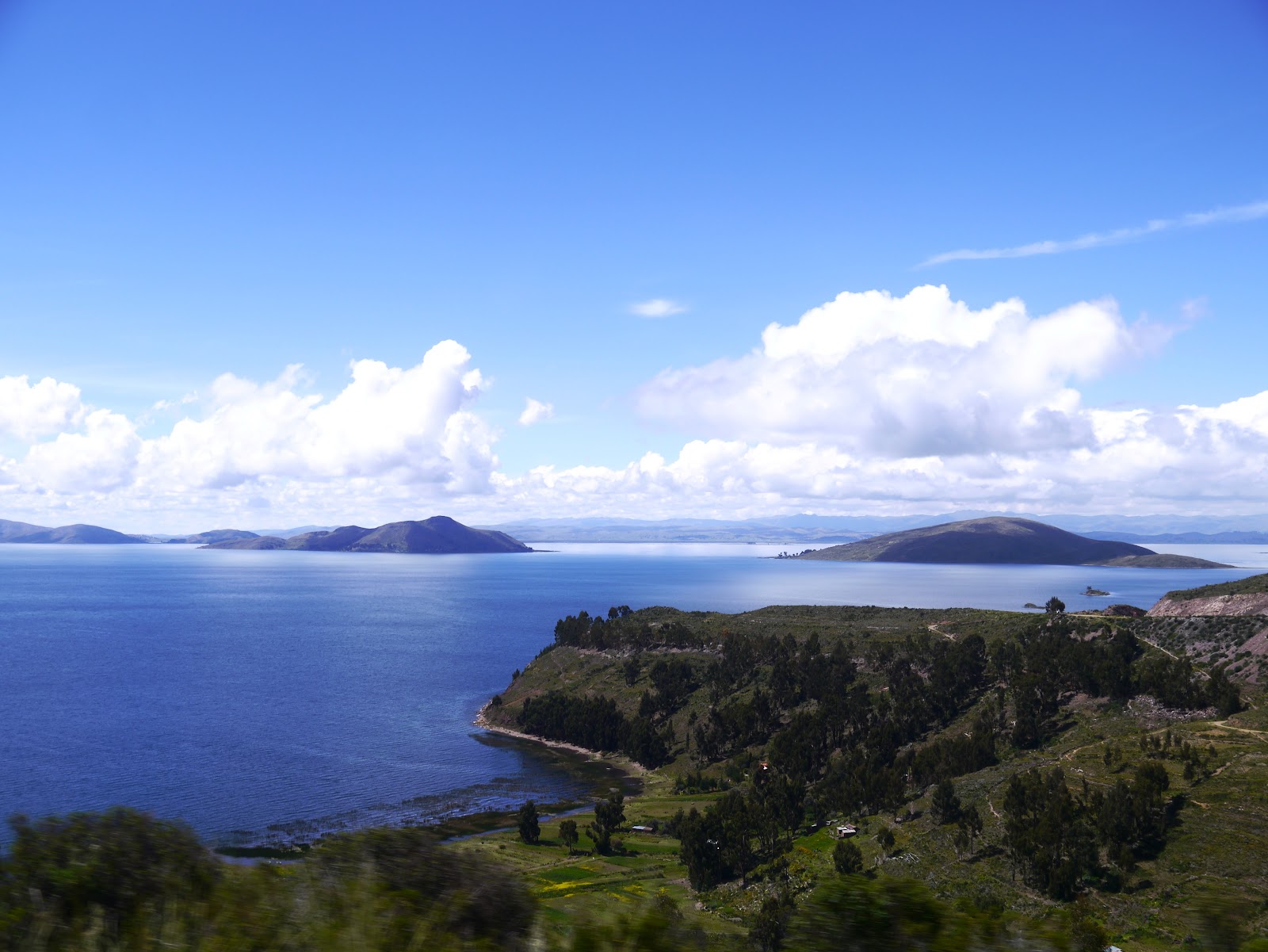
The rural route to Copacabana was quite scenic. The first half of our drive featured snow-capped mountains to our right and farmland dotted with huts, livestock and more mountains to our left. The second half was mostly spent hugging the shores of the beautiful Lake Titicaca.    


Copacabana Cathedral


We arrived in Copacabana in the afternoon and had little trouble finding a place to stay. There was no shortage of accommodation in this tourist ready town. After some haggling, we dropped our gear at option number four.


Isla transporte


The next day we took Transporte Lacustre to Isla del Sol. Our "lackluster" craft creaked and groaned and fed us a steady diet of gas fumes, but it eventually got us to our destination.


Terrazas del Inca

Our hike started at the north end of Isla del Sol. We headed down the beach, past the hippies to the trail head. Within a few minutes we were weaving around donkeys, pigs and sheep as the trail meandered along the water and through a few small farms. We enjoyed the unique surroundings of Inca terrace farming combined with great views of the lake as we worked our way to the first Archaeological site.          


Isla del Sol


Chuletas de puerco


Traversing Isla del Sol is like driving down route 5 in Chile. Each time you get up to speed you have to pull over and pay a toll. After entering the "central territory", the trail took us along a high ridgeline that gave us the perfect vantage point to see all that was happening around us. Similarly to the mainland, tending to livestock is also part of life for many on the island.        


Escaleras del Inca


$7 got us a rustic, but private room in Yumani. We had a decent meal with friends from England and Spain before returning to our hostel to play cards. The next day started with us knocking on random doors in an attempt to pay someone for the lodging. We eventually succeeded and set out to visit the remainder of the island. The southern attractions included a handful of ruins, a fountain and the Inca steps which descend to the water. 


Wednesday, March 6, 2013

Sucre y La Paz

Sucre, Bolivia

We lingered around Potosí long enough to obtain a new hard disc for our laptop. Despite being packed securely, it either didn´t survive the rough off-road tour or the high altitude may have taken its toll. Before departing for Sucre, we enjoyed our final meal of “fillet of beast to the iron, accompanied by dad” which tasted remarkably similar to steak and potatoes. Restaurants that use google translator for their menu have some bizarre options available and provide us with plenty of entertainment on the side. 


Pedestrian unfriendly


A scenic three hour drive took us to the city of Sucre. The original capital of Bolivia is largely made up of whitewashed buildings, colonial architecture and incredibly narrow sidewalks.


Textiles Indígenas


Encountering the Bolivian style lunch option of “pollo al spiedo” or chicken on a spit was a truly delightful experience. The ¾ and ¼ chicken meals tided us over perfectly. After lunch we climbed eight blocks to the “mirador” for a view of the city. The reward was a bird´s eye view of the terracotta rooftops from above. From there, we paid a visit to the Museo Indigena which provided an interesting look into some of the traditions and way of life of the Bolivian people. 


Sucre´s plentiful market


Sucre´s large market had a bit of everything. The food stands were lined with fruit, vegetables, spices, cow heads, chicken feet and everything in between. We took advantage of the fresh fruit milkshakes that were popular, cheap and delicious. 


McDoña's

The terminal in Sucre was home to a few unsafe acts. The most notable being a rather dubious system involving a pulley wheel, luggage and a busy bus platform. Shortly into the inadvisable exercise a man got sniped by a Samsonite from above when he unwittingly wandering into the line of fire. After supervising the handling of our bags we boarded the twelve hour bus to La Paz. Cindy enjoyed her “full cama” while I “tossed my cookies”. I had resisted the “McSalchipapa” that we passed en route but poor roads, worse driving and perhaps a second chicken feast in as many days were to blame. 


La Paz

La Paz and Sucre share capital city status but the similarities seem to end there. La Paz is unique, spilling downwards into a canyon below. Buildings and houses cling to the steep slopes in remarkable fashion. Our bus descended a peculiar series of roads on the way to an early 7 a.m. arrival at the terminal. With the help of a taxi we arrived at the doors of our rudimentary accommodation.


Mirador Killi Killi
Dizzying altitude, chaotic streets, sprawling markets, and high police presence are just a few of the charms of La Paz. A taxi ride, that ended prematurely when the taxi powered out multiple times trying to ascend one of the many steep hills plus a short hike and we were at the primary look-out point known as “Mirador Killi Killi”. It was closed due to “emergency work”, but we were able to skirt around the outside after shrugging off some dirty looks from the “crew”. Our perseverance paid off and led to spectacular views of the city.


Plaza Murillo

Wandering through the witches market provided us with grisly scenes of dead baby llamas hanging from store fronts along with other odds and ends used for ceremonies. After getting our fill of that carnage we headed to the busy Plaza Murillo where we found more pigeons than one can shake a stick at.  

Wednesday, February 27, 2013

Life in the silver mines

Cerro Rico

The "rich mountain" and its tremendous silver supply once made Potosí the richest city in South America. Although it can no longer claim the same wealth, Potosí remains one of the highest cities in the world. While the altitude makes it difficult to get oxygen at times, it´s the dilapidated buses and horrid exhaust fumes from the abundance of non eco-friendly traffic that really made walking the streets terrible for the duration of our stay.  


Bearing Gifts

Before commencing our tour of the famous mines, we stopped at a local shop to pick up a few of the bare essentials. The three items that the miners would appreciate the most included coca leaves, moonshine and of course dynamite. Coca leaves were not only obligatory for those entering the mines, but are also a form of currency in these parts. A lady that was toiling outside the mine was ecstatic to receive her own bag.    


Mineros en la zona verde


After a lot of hunched over walking and some crawling we made it into the green zone. This little refuge is where the miners convene to chew coca leaves, drink moonshine and insult each other during their breaks and downtime. We made sure to add a fresh handful of leaves to our growing wads. Coca helps to battle fatigue and hunger and  prevents altitude sickness.    


El Tío


After ascending a chain of three rickety ladders we were surprised at what we found in the next refuge. "El Tío" rules the underworld and we had entered his lair. The miners are a superstitious group so asking to be blessed with good luck and making offerings to the demon of the mines is a way of life. Part of the group paid homage to "El Tío" by swilling 96% grain alcohol. Our guide, Pedro, who is an ex-miner took numerous hauls off the plastic bottle, eventually going slightly cross-eyed.  


Copper Sulphate
Our uncomfortable journey continued down another narrow shaft. We trudged through mud and murky waters, carefully picked our way around unmarked pits and did our best to avoid contact with the toxic substances that surrounded us. Colorful copper and silver sulphate formations that hung in our path had to be dodged along the way. At one moment, I was forced to wiggle through a small opening on my belly just to continue on.


Mine Shaft


After an eye-opening experience and the equivalent of a ninety minute walk under a kitchen table we were relieved to finally see the light of day again. The last few steps of our exit point was by far the most comfortable for walking. The working conditions on the inside are nothing short of horrendous.


Los Mineros

Tuesday, February 26, 2013

Backcountry to the Salt Flats

Bolivian Backcountry

The commitment was to jump into a 4x4 Toyota Landcruiser for a four day tour of southwestern Bolivia. We had a driver/guide, a cook and two other unknown individuals to share the experience with. We gave it some thought and figured that being in Bolivia and not visiting the world´s largest salt flat would be stupid so we signed up. Lagoons, mountains, volcanoes, ruins and geysers would help us pass the time on our way to the famous Salar de Uyuni. A surprise came in the form of the mystery twosome that would complete the group. A week earlier in Salta, we met Darko and Lijia. The couple from New Zealand, by way of Croatia and Peru reappeared at the perfect moment and joined the tour. Day one started with a late departure due to a fuel shortage at the tanks but once on the road things started looking up. Rene, our guide and driver had ten years of experience and Maria, our personal cook, wasted little time rolling out our first delicious meal.     


Géiser Sol de mañana


We spent our first night at San Antonio de Lipez. After a fitful and breathless sleep at 4,200 m. in a basic shelter (sin luz), we started day two at the early hour of 5 a.m. Cindy battled a touch of altitude sickness as we passed through a maze of ruins, mountains, volcanoes and colorful lagoons on our way to visit the geysers at more than 5000 m.    


Flamenco de Laguna Colorada


Before sitting down to our afternoon maté in Huaylljara, we visited Laguna Colorada. This beautiful lagoon is a stunning salmon red color and boasts three species of flamingos. Herds of llamas and vicuñas, viscachas and the endangered suris, which are similar in appearance to the ostrich,  made up the rest of our Bolivian safari.   


Árbol de Piedra


At 6:30 a.m. we got the call. Maria spoiled us with a delicious pancake breakfast to start day three. We stopped to take pictures at the "Tree of Stone" and climbed some of the interesting rock formations that surround it. Cindy had returned to good health and everyone was in high spirits despite the bumpy roads and dusty jeep.


Bolivianas


The rough road resulted in a few stops along the way for vehicle maintenance. We had an extended opportunity to look around the town of San Cristobal while Rene worked on a broken tie rod. After spending a few days in the remote backcountry of Eduardo Avaroa National Reserve, snacks, drinks and ice-cream availability helped make our brief stop a pleasant one.  


Indiana Jones


Cementerio de Trenes was the last scheduled tour stop for the day. After changing a flat on our unit, we spent some time exploring the array of old trains in their final resting place.  


Foto loca

We got up before sunrise, assembled our group and sped out to the salt flats in total darkness. Initially we were driving slowly through knee deep water but as the water level decreased our speed increased. As the sun rose, we were surrounded by the vast salt flat and busy taking "fotos locas". At nearly 11,000 square kilometers, Salar de Uyuni is certainly unique and standing on it is surreal.     


Salar de Uyuni

Monday, February 25, 2013

Butch Cassidy and the Sundance Kid

Red Dead Redemption

Entering Bolivia was more than crossing an imaginary line. The difference from one side of the border to the other was much more dramatic than we had imagined. The predominant color of the streets and the buildings that lined them was a muddy brown. Brightly dressed ladies in bowler hats were setting up shop to sell goods. A certain element of additional craziness was evident in the streets despite the early hour. We trudged towards the bus terminal, taking in the stunning contrast of color, style and language along the way. From the terminal we negotiated a rate for a colectivo ride to Tupiza and left the border town of Villazon. Within minutes we were on our way to  “La Joya de Bolivia”.   


Vaquera

Cindy finally got her wish. A trail ride in a wild west setting. As always, the primary concern with horseback riding in a foreign country is the health of the horses. After being pleasantly surprised with the condition of our mounts we rode out into a string of valleys not far from the final robbery site of the famous duo, Butch Cassidy and the Sundance Kid. 


Puerta del Diablo


Secondary considerations that came after mounting up included getting hit by a maniac behind the wheel of a 4x4 on our way to the trail head or getting bucked off a cliff. Cindy´s horse, Tabaco, was especially docile which helped make the ride more comfortable for both of us. After enduring a few precarious positions we arrived at the "Devil´s Door". 


Vaqueros enamorados


As the horses had a much deserved rest and drink from a fresh water stream, Cindy and I scrambled up "El Cañon del Inca" to have a better look around and enjoy some time out of the saddle. 


Valle de Los Machos


Our return trip took us through "Valle de los Machos". We enjoyed every minute of this scenic ride as any fan of the wild west era would. I continually scanned the rugged slopes for movement but the ambush never came.